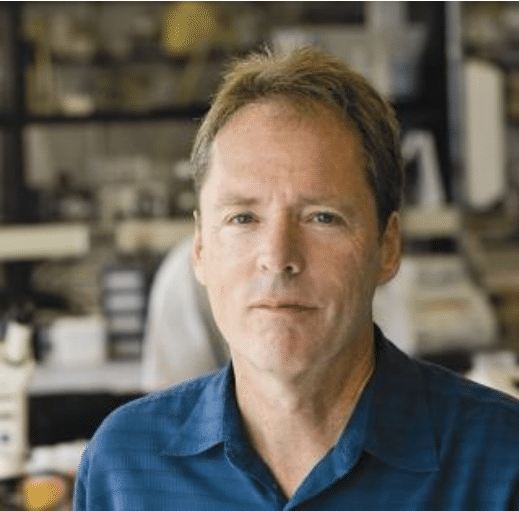
Mark Nelson is the world’s leading small artery physiologist, with particular emphasis on the brain circulation. Mark is a University Distinguished Professor and Chair of the Department of Pharmacology at the University of Vermont and also holds a 20% appointment within the Division of Cardiovascular Sciences at the University of Manchester.
In 2019, Mark was elected to the National Academy of Sciences, one of the highest accolade for scientists in the USA. Mark has mentored over fifty post-doctoral scientists during his career with many of his laboratory alumni now holding senior positions in science across the world. Mark’s research interests include elucidating the mechanisms by which cerebral blood flow is controlled to meet the diverse and ever-changing demands of active neurons and how these mechanisms are disrupted in small vessel disease – a major cause of stroke and dementia. Mark has unravelled many of the major mechanisms that control cerebrovascular function, including the discovery of local calcium signals (‘sparks’), which counter-intuitively oppose vasoconstriction. He showed that brain capillaries act as a neural activity-sensing network by initiating and transmitting an electrical signal, mediated by potassium channel activation, that propagates through the interconnected endothelial cells comprising the capillaries that line all blood vessels. This concept explains the rapid and coordinated delivery of blood to active neurons. The near-term goals of Nelson laboratory are to create an integrated view of electrical, calcium and related regulatory signaling mechanisms at molecular, biophysical, and computational-modeling levels by examining their operation in increasingly complex segments of the brain vasculature ex vivo, in vivo, and in silico.
 Microvascular @ Manchester